 Understanding Tissues in Organisms
Slideshow
Edit
1. Understanding Tissues in Organisms
2. Plant Tissues Overview
3. Meristematic Tissue Types
4. Simple and Complex Permanent Tissues
5. Storage Role of Parenchyma
6. Animal Tissues Overview
7. Purpose of Epithelial Tissues
8. Examples of Connective Tissues
9. Functions of Connective Tissue
10. Examples of Connective Tissue Functions
11. Types of Muscle Tissue
12. Role of Nervous Tissue
13. Impulses Explained
Introduction to Tissues
1. Understanding Tissues in Organisms
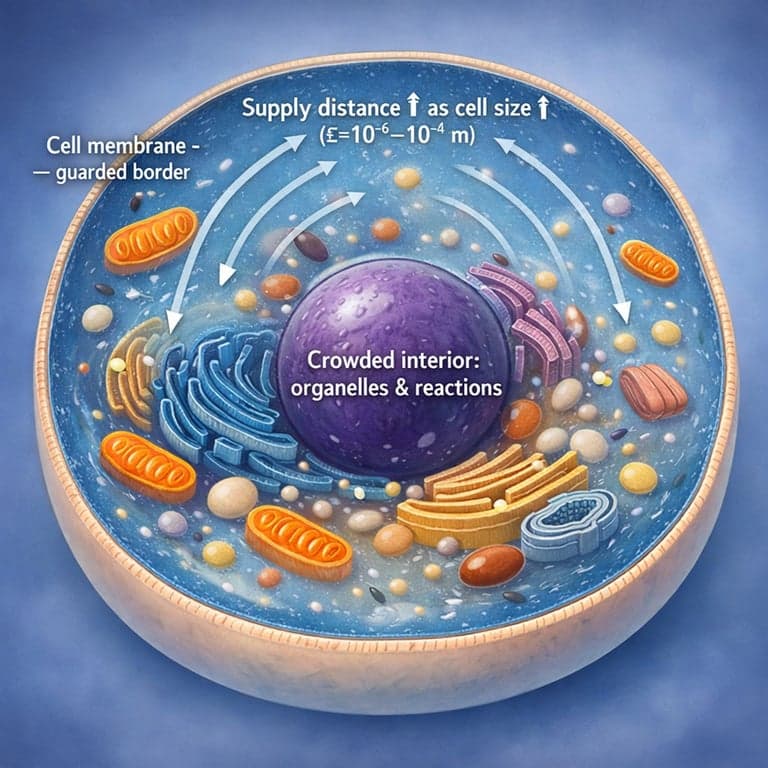
All living organisms are made of cells. In multicellular organisms, cells specialize to perform specific functions, efficiently forming tissues. Tissues are groups of similar cells designed for efficient function.
Plant Tissues
2. Plant Tissues Overview
Plant tissues are broadly categorized into meristematic and permanent tissues. Meristematic tissues are responsible for growth, while permanent tissues provide structural and functional support.
3. Meristematic Tissue Types
Meristematic tissues are classified into apical, lateral, and intercalary based on their location. They contribute to growth in length and thickness of plants. Apical meristems contribute to vertical growth, increasing the plant's height, while lateral meristems contribute to thickening, supporting a plant's structural stability.
4. Simple and Complex Permanent Tissues
Permanent tissues in plants are simple (like parenchyma, collenchyma, sclerenchyma) and complex (xylem, phloem). Simple tissues support storage and flexibility, while complex tissues aid in transport.
5. Storage Role of Parenchyma
Parenchyma cells store nutrients and water, providing a reservoir for the plant. An example is the storage of starch in potato tubers.
Animal Tissues
6. Animal Tissues Overview
Animal tissues are categorized into epithelial, connective, muscular, and nervous tissues. Each type performs distinct functions like protection, support, movement, and impulse transmission.
7. Purpose of Epithelial Tissues
These tissues act as a barrier to protect against microbial invasion and dehydration, playing a crucial role in the body's defense mechanisms.
8. Examples of Connective Tissues
Bone supports the body structure, blood transports nutrients and waste, and adipose stores energy and insulates the body. Skeletal, cardiac, and smooth muscles have distinct structures and functions, with skeletal being voluntary and the others involuntary.
9. Functions of Connective Tissue
Connective tissues include blood, bone, cartilage, tendons, and ligaments. They connect and support various tissues and organs in the body, providing structure and transporting nutrients.
10. Examples of Connective Tissue Functions
Bones provide structure and support; tendons connect muscles to bones; ligaments stabilize joints; cartilage provides flexible support. Cartilage, unlike bone, does not contain blood vessels, making it flexible yet less regenerative. It acts as a cushion in joints.
11. Types of Muscle Tissue
Muscular tissue types include striated, smooth, and cardiac muscles. Striated muscles are voluntary, smooth muscles are involuntary, and cardiac muscles are found only in the heart.
12. Role of Nervous Tissue
Nervous tissue consists of neurons responsible for transmitting impulses. It is essential for responding to stimuli and facilitating communication within the body.
13. Impulses Explained
Impulses are electrical signals that travel along neurons, crucial for quick responses to stimuli. Touching a hot surface prompts sensory neurons to send impulses to the brain, which then signals muscles to withdraw.








 Understanding Tissues in Organisms