 Habitable Planets
Slideshow
Edit
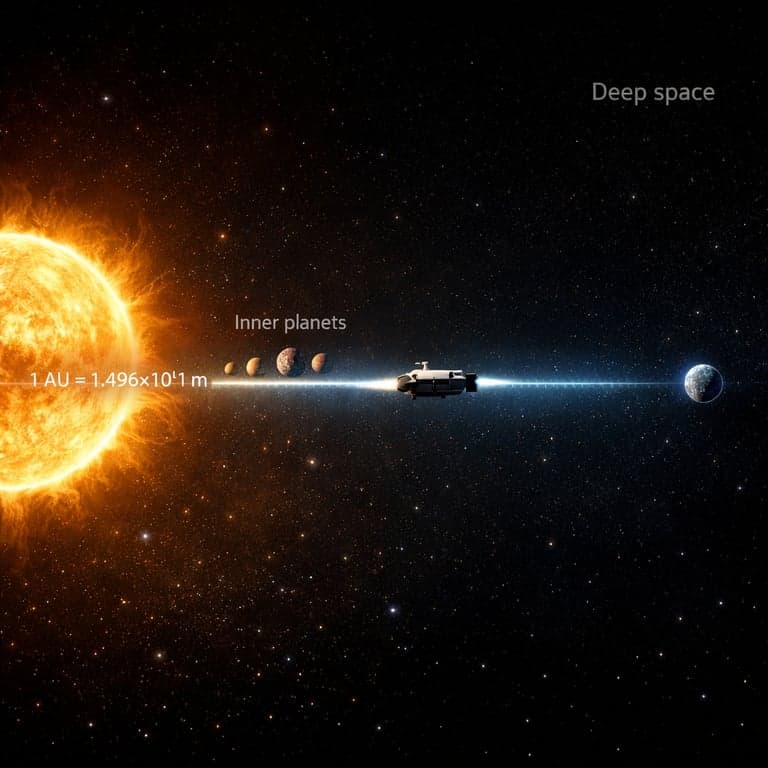
1. Circumstellar Habitable Zone (HZ) concept
2. Stellar spectral type and stellar activity
3. Tidal locking and climate implications
4. Energy balance and equilibrium temperature
5. Greenhouse gases and pressure broadening
6. Runaway greenhouse and moist greenhouse limits
7. Atmospheric escape: thermal and non-thermal
8. Planetary mass, radius, and surface gravity
9. Internal heat, geology, and plate tectonics
10. Magnetic fields: protection and limits
11. Biosignature context: O2, O3, CH4 and false positives
12. How we measure atmospheres: transmission/emission spectroscopy
13. Mass and radius measurements: RV and transits
14. Climate and photochemical modeling tools
HZ & Stellar Influence
1. Circumstellar Habitable Zone (HZ) concept
Loading equations
2. Stellar spectral type and stellar activity
Habitability depends on stellar spectrum and variability: M dwarfs emit more IR (affecting ice/albedo feedback) and often show strong flares/UV/XUV that can erode atmospheres and alter photochemistry. Pre–main-sequence M-dwarf luminosity can desiccate close-in planets early. Activity indicators (Hα, Ca II H&K, X-ray) constrain long-term atmospheric retention risk.
3. Tidal locking and climate implications
Planets in close-in HZs (common around M dwarfs) may tidally lock, producing permanent day/night hemispheres. 3D GCMs show that with sufficient atmospheric mass and heat transport, collapse on the nightside can be avoided, and reflective substellar clouds can widen the inner HZ. Rotation rate changes atmospheric circulation, cloud patterns, and surface habitability maps.
Atmospheres & Greenhouse
4. Energy balance and equilibrium temperature
Loading equations
5. Greenhouse gases and pressure broadening
Key greenhouse absorbers include H2O, CO2, CH4, and (under some conditions) H2. Higher surface pressure increases absorption via pressure broadening and collision-induced absorption, altering outgoing longwave radiation. CO2 provides strong long-term climate buffering through the carbonate–silicate cycle; too much CO2 can increase Rayleigh scattering and cool the planet despite greenhouse forcing.
6. Runaway greenhouse and moist greenhouse limits
At high insolation, increased water vapor reduces outgoing longwave radiation, potentially triggering a runaway greenhouse where oceans evaporate. A “moist greenhouse” occurs earlier when the stratosphere becomes water-rich, accelerating hydrogen escape. These define the inner HZ edge in 1D/3D climate models and depend on clouds, relative humidity, and planetary rotation.
Atmospheres & Escape
7. Atmospheric escape: thermal and non-thermal
Loading equations
Planet Properties
8. Planetary mass, radius, and surface gravity
Loading equations
9. Internal heat, geology, and plate tectonics
Long-term habitability may require geologic recycling of carbon and nutrients. Radiogenic heat and secular cooling drive volcanism and tectonics; plate tectonics can stabilize climate by linking CO2 outgassing and silicate weathering. Stagnant-lid planets may still be habitable but can have episodic resurfacing and less efficient CO2 regulation; water content strongly influences lithosphere strength.
10. Magnetic fields: protection and limits
A dynamo-generated magnetic field can reduce atmospheric ion loss by deflecting stellar wind, but protection is complex: some escape channels persist and strong fields can funnel particles to poles. Dynamo likelihood depends on core size, composition, and convective power; tidal heating or rapid rotation can help. Observational hints may come from star–planet interactions or radio emission searches.
Biosignatures & Interpretation
11. Biosignature context: O2, O3, CH4 and false positives
Potential biosignatures often involve atmospheric disequilibrium, e.g., coexisting O2/O3 with CH4. However, abiotic O2 can build up via water loss and H escape, or CO2 photolysis under low reductants. Interpreting spectra requires planetary context (stellar UV, surface sinks, volcanic gases). Multi-gas frameworks and time evolution models reduce false-positive risk.
Observations & Modeling
12. How we measure atmospheres: transmission/emission spectroscopy
Loading equations
13. Mass and radius measurements: RV and transits
Loading equations
14. Climate and photochemical modeling tools
Habitability studies use 1D radiative–convective models for rapid HZ scans, 3D general circulation models (GCMs) for clouds and dynamics, and photochemical models for UV-driven composition. Key uncertainties include cloud microphysics, aerosol formation, and surface-atmosphere coupling. Model–data comparisons use spectra, phase curves, and stellar inputs to constrain parameter space for candidate habitable planets.




 Habitable Planets